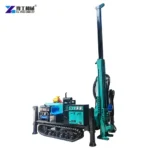
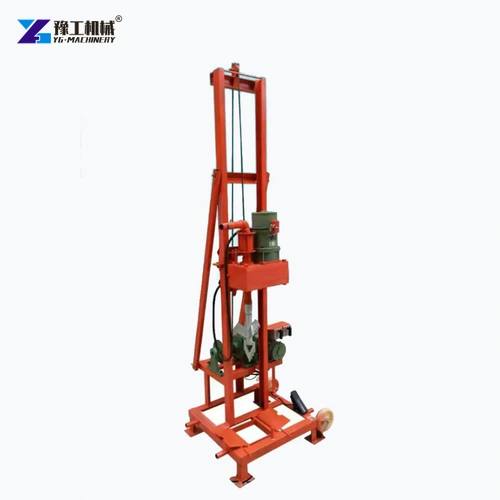
A portable water well drilling machine still needs a prepared working position, room for the mast and rods, a suitable power supply and a way to manage circulating water and returns. Its smaller footprint can help where access is limited, but portability should not be confused with one-person handling or the ability to drill every formation.
The first planning question is how the equipment reaches the proposed borehole and operates there. For a garden, farm or small water project, a machine may fit through an entrance yet lack the clearance needed to drill. Review the whole setup before choosing between compact electric configurations.
Trace The Route To The Borehole Before Measuring The Drill
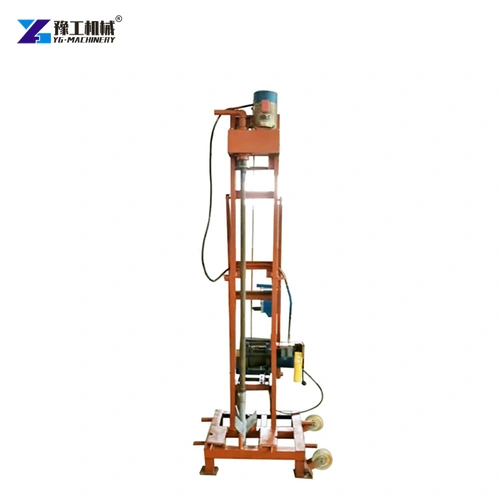
Inspect the route from the unloading position to the proposed drilling point. Doorways, corners, changes in level and ground support all affect handling. A narrow machine dimension does not demonstrate that the assembled mast can pass under an overhang or that a wheeled base can be moved safely over steps and uneven ground.
Decide how the equipment will be unloaded and moved using a method suitable for its actual weight and construction. Any separate accessories need their own handling space. Do not infer lifting points or disassembly procedures from a product photograph; use the provisions supplied for the particular machine.
A portable water well drilling machine should be compared in the state in which it will actually travel along that route. An operating-size entry is not necessarily a folded transport dimension. If the equipment can be dismantled or lowered for transport, the allowed arrangement and reassembly method need to be part of the supplied instructions, not an assumption based on the word portable.
Describe the unloading point, entrance restrictions and route to the proposed borehole.
Keep The Mast And Rod-Handling Area Clear
Once the base reaches the borehole, the mast must be positioned for the intended work. Look above the machine as well as beside it. Roof projections, branches and other obstructions can interfere with the raised structure or rod handling. The equipment’s listed height does not by itself describe all the space occupied during operation.
The operator needs a controlled place to add and remove rods and to store them without obstructing access. Keep that work separate from uncontrolled pedestrian or vehicle movement. A small site may require a different arrangement of supplies and water equipment even when the drill itself appears compact.
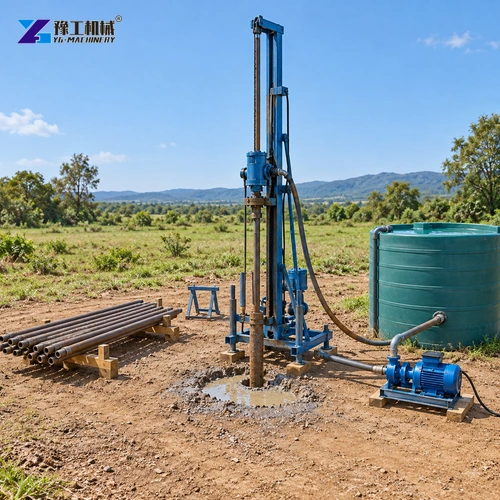
When selecting a portable water well drilling machine, draw the drilling point, machine, rods, water equipment and access route together. This reveals conflicts that a doorway-width measurement misses. The base must also have support suitable for the operating arrangement; simply making the equipment fit in plan view is not enough.
Plan The Water Circuit And The Returns Area Together
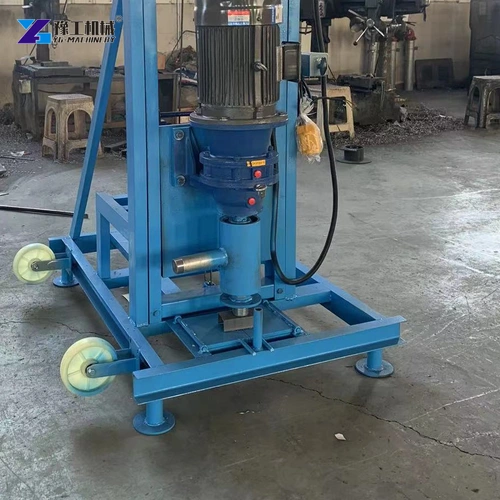
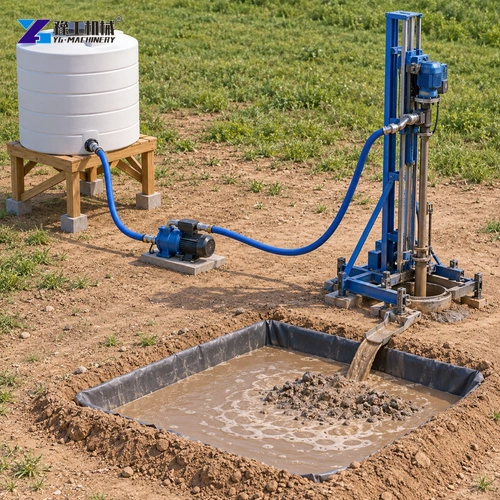
A rotary water-well setup can use circulating water to support cutting and remove material from the hole. The required method depends on the drilling tools and formation. A water pump listed with the equipment is part of that arrangement, not a guarantee that the drilling point has an adequate water supply or suitable return management.
Identify where water comes from, how it reaches the drill and where returned material is collected. Hoses need a practical route that does not block the operator or create an uncontrolled crossing. Returned water and cuttings also need an appropriate handling arrangement for the site; discharge should not be left as an afterthought once drilling starts.
A portable water well drilling machine is easier to deploy when these supporting functions are organised near the borehole without crowding the working position. However, the water source, collection area and electrical installation remain separate site requirements. They are not eliminated by selecting a smaller drilling frame.
Follow the water through one complete circuit on the site sketch: supply point, pump, drilling point, returns collection and any permitted reuse or disposal. Mark rod storage on the same drawing. If a hose crosses the rod-handling space, move the supporting equipment before work begins rather than squeezing everything around the drill after it arrives. This is why a compact frame can still need a carefully organised working area.
Send the water source, hose route and returns arrangement to discuss the supporting equipment.
Compare The HY Electric Well-Drilling Configurations
The following table keeps the HY-180B and HY-240E values separate. Both are compact electric configurations. The figures should not be transferred to a diesel unit or another machine simply because its frame has a similar appearance.
| Parameter | HY-180B | HY-240E |
| Opening hole diameter | 80–200 mm | 0–260 mm |
| Drilling depth | 80–100 m | 120 m |
| Drill pipe diameter | 42 mm | 51 mm |
| Drill pipe length | 1.5 m | 1.5 m |
| Motor power | 1.5–2 kW | 4 kW |
| Pump power | 2.2 kW | 2.2 kW |
| Voltage | 220 V | 220 V |
| Lifting force | 500 kg | 800 kg |
| Dimensions | 700 × 700 × 2500 mm | 800 × 700 × 2500 mm |
| Weight | 120 kg | 200 kg |
The opening-diameter entry is an equipment range, not a recommendation for the final well construction. Select the bore and completion arrangement for the project. Similarly, the depth figures do not guarantee that a particular site will produce water at that depth or that every formation can be drilled under identical conditions.
The foundation and drilling equipment range distinguishes the wider machinery options. Compare a portable water well drilling machine with another rig only after establishing whether both suit the same ground, borehole purpose and support arrangement.
Provide the intended hole and tooling requirements to compare the HY electric configurations.
Ground Conditions Can Outweigh The Access Advantage
The formation affects the suitable bit, drilling method and handling of the hole. Loose material, changing layers or harder rock can introduce different requirements. A compact rotary frame is not automatically interchangeable with an air-powered rock-drilling system or a larger hydraulic crawler rig. Select the method with the expected ground conditions in view.
Use available ground information or nearby borehole records to discuss likely layers and the completion objective with the drilling professional. Such records help planning but do not prove that the same conditions or water yield will occur at the new location. Water-well construction and completion require project-specific judgement beyond the machine specification.
For a portable water well drilling machine, state whether the aim is a domestic supply, irrigation source or another permitted water use. The purpose influences the well design and testing work. Buying drilling equipment alone does not establish water quality, sustainable yield or permission to use the completed well.
Specify A Working Package Rather Than A Bare Frame
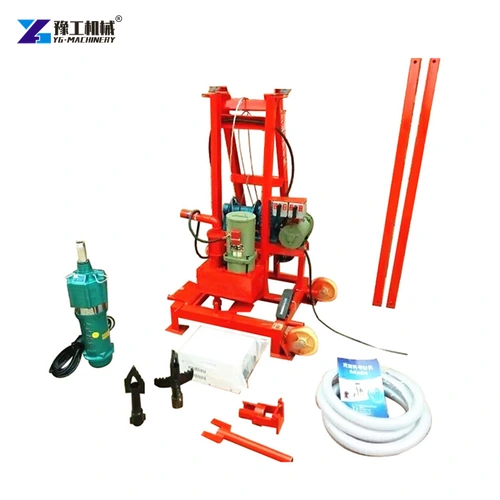
An enquiry should identify the target hole, expected formations, access limitations and available power and water. Then compare the drill, tools, rods, pump and supplied accessories as a complete scope. A low machine-only price may omit items required to operate at the proposed drilling point.
Check the electricity arrangement for both the drilling drive and the associated pump. Their individual power entries should not be treated as a plug-and-play connection specification. The installation needs to suit the actual supplied equipment and operating conditions, with appropriate protection and routing assessed by a qualified installer.
The practical test for a portable water well drilling machine is straightforward: it must reach the borehole, operate with adequate clearance and work with the required support equipment. Confirming these conditions produces a more useful choice than selecting the smallest-looking machine and hoping the remaining arrangements will fit later.
Include the ground information, site utilities and required tools for a complete drilling-package proposal.
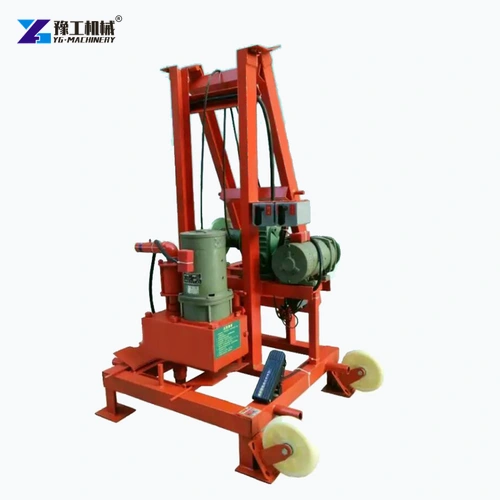
Portable Water Well Drilling Machine FAQs
No. Compare the actual equipment weight and the supplied handling provisions. Portability describes movement between locations, not a safe manual-lifting limit or a one-person handling instruction.
Not necessarily. Mast positioning and rod handling can require additional working space. Review the supplied operating arrangement at the proposed borehole rather than relying on one overall dimension.
No. The equipment still needs an appropriate water source and a route for supply and returns. Collection and handling of returned material remain part of the site plan.
No. A machine’s depth specification is not a groundwater investigation or yield guarantee. Ground conditions, well design, completion and testing determine the resulting water supply.
Do not assume interchangeability. Match rods, connections, tools and pump arrangements to the selected configuration. Similar appearance does not establish compatible dimensions or operating limits.
For an equipment proposal, include the planned hole, ground information, site access and available power and water.