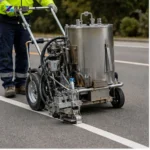
A parking lot line striping machine is only as useful as the layout it follows. Before comparing machines, mark the parking bays, travel aisles, turning areas and symbols that the site actually needs. The operator’s path, paint system and required line finish then determine whether a compact single-gun cold-paint unit is suitable or whether the work calls for a different marking package.
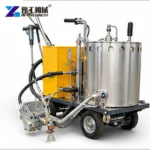
For parking lots and other paved areas, YG lists the YG-8S cold-paint road marking machine with a single gun and a stated spray-width range. That makes it a starting point for defined line work, not an automatic answer for every lot, paint or symbol. This guide explains how to turn a site plan into a machine decision, set up a controlled test, and compare the equipment with your own marking tasks. The related road line marking machine page shows the product family, while the cold-paint road marking machine page covers the cold-paint configuration.
Map parking bays and traffic paths before choosing a line striping machine
Begin with the lot as drivers and pedestrians will use it. Mark the features that determine the machine’s route and each stripe’s start and stop:
- Bay boundaries and the main travel aisles
- Vehicle turning paths, entrances and exits
- Stop points or other places where the operator must restart the spray
- Curbs, drains, islands and repaired areas that reduce usable pavement
Measure the site rather than relying on a drawing that may no longer reflect the pavement. This layout shows where the striping machine can travel continuously and where the operator must stop, turn or reposition.
Separate long straight runs from short lines, corners and symbols. The continuous runs reveal whether a machine can work efficiently without frequent repositioning; the short details reveal whether the operator can keep the gun aligned and restart cleanly. For directional arrows, stop bars or crosswalk-style graphics, plan how each shape will be formed and masked instead of assuming a line gun can reproduce every graphic by itself. Check the site-specific plans and local requirements for dimensions and markings; this guide does not prescribe a universal parking-space size or code layout.
Once the layout is marked, estimate how much of the job is long parallel lines and how much is detailed work. That proportion is more useful for machine selection than counting stalls alone because it predicts operating rhythm, maneuvering and paint interruptions.
Share the lot sketch and stall count so the marking sequence can be planned around the traffic flow.
REVIEW MY PARKING LOT LAYOUT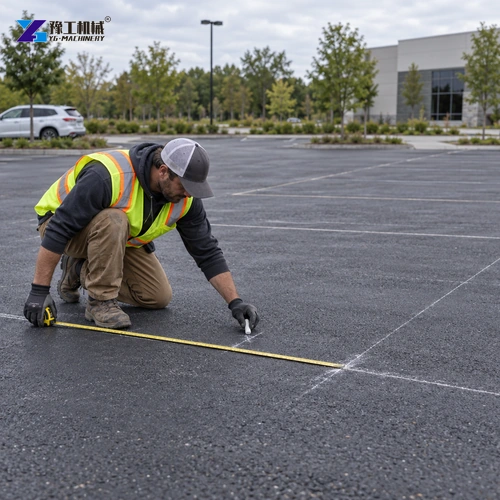
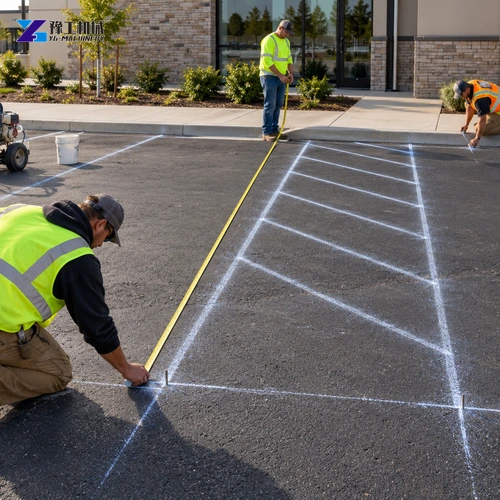
Match a parking lot line striping machine to line width and paint system
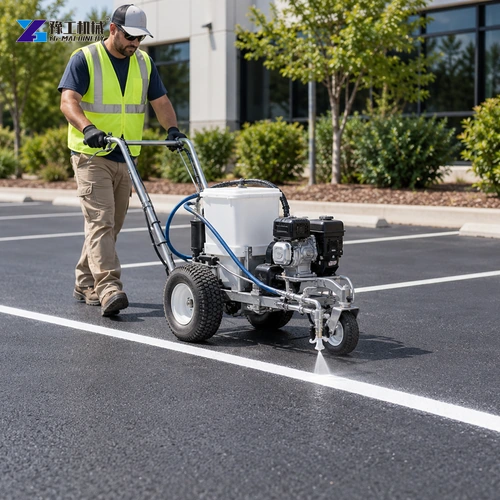
The YG-8S is a single-gun cold-paint machine. Its gun applies paint at normal temperature, so the work plan does not require a hot-melt kettle for this configuration. A single gun is suited to one controlled spray path at a time; if the plan depends on producing multiple parallel lines in one pass, compare a multi-gun arrangement instead of assuming the single-gun model can do that work.
Line width must be set from the project drawing and the application. The YG-8S lists a spray width range of 100–300 mm; that is the equipment’s stated adjustment span, not a claim that every width is appropriate for every parking line. Select a nozzle and guide arrangement for the specified width, then test on a representative pavement section. If edges feather, width varies at starts or the film is uneven, check machine guidance, paint condition, nozzle selection and operator pace before laying out the full lot.
Paint system and pavement condition also matter. Confirm that the intended paint is compatible with the machine, can be supplied consistently to the gun and suits the site surface and reopening plan. Old coatings, patchwork and dusty pavement may cause a new line to look inconsistent even when the machine is correctly adjusted. Clean the test area and use the same preparation expected for the production run.
YG-8S cold-paint machine parameters for parking-lot striping
These specifications help screen whether the machine’s spray and handling range fits the planned lines. They should be read together: spray width identifies the adjustable marking span, flow and pressure describe the delivery system, and the single-gun configuration sets the number of simultaneous spray paths.
| Parameter | YG-8S |
| Product model | YG-8S |
| Engine power | 5.5 hp Honda gasoline engine |
| Plunger pump | Electronic reversing |
| Spray gun | Single gun |
| Work mode | Hydraulic |
| Pressure | 8–12 MPa |
| Unloading flow | 4.8 L/min |
| Spray width | 100–300 mm |
| Spray thickness | 0.2–0.4 mm |
| Dimensions | 1600 × 800 × 1200 mm |
| Weight | 120 kg |
Do not treat pressure or flow alone as a measure of completed stalls per hour. The operator still needs to follow the line plan, keep the machine aligned and pause for turns, refills and surface changes. The listed thickness is a product parameter; the finish on site also depends on the selected paint, nozzle, pavement and application setup.
Send the surface type and narrowest access point to compare the walk-behind machine with your work area.
CHECK THE YG-8S AGAINST MY LINE PLAN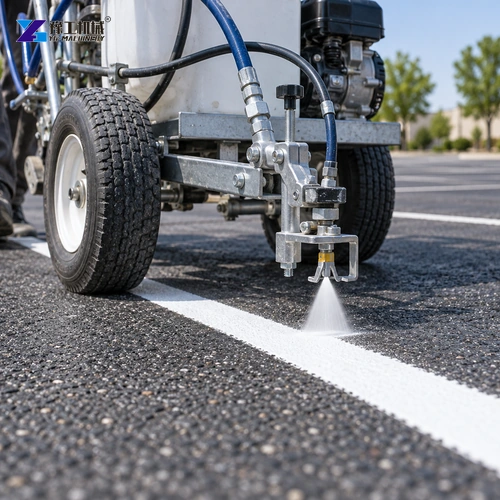
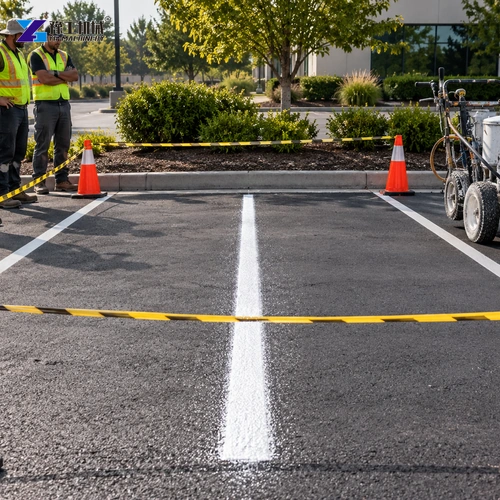
Test the stripe and work sequence on representative pavement
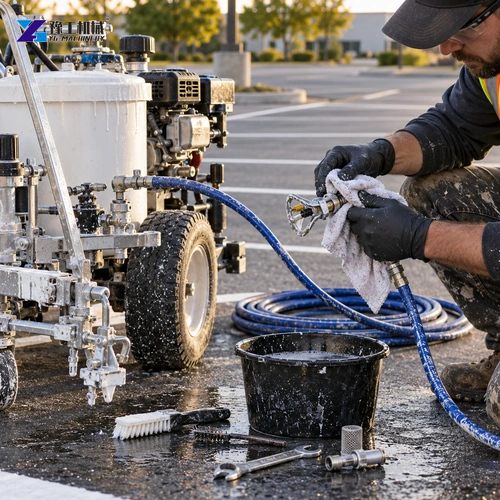
Use a short trial that includes the kind of line the crew will repeat most often. Mark the start and stop points, clear the surface, set the guide and apply a line at the planned walking pace. Measure the result at several points rather than judging only the first few feet. Look for stable width, clean starts and stops, consistent edge definition and a film appearance that matches the project requirement.
Then test a turn or restart. A machine that lays a good straight line can still need a deliberate sequence for corners, bay ends and short markings. Decide where the operator will stop, how the gun will be controlled during a restart and whether a template or masking is needed for special shapes. If the test line varies, adjust one factor at a time—surface preparation, guide alignment, nozzle, paint feed or operator pace—so the cause is clear.
This trial also exposes access issues. Check whether the machine can pass between parked vehicles, islands and curbs, and whether its turning space is sufficient at each row end. If the lot cannot be closed all at once, divide the work into sections with a clear entry and exit route and a way to keep traffic away from wet markings.
Organize surface preparation, traffic control and reopening
Before production, remove loose dust and debris from the marking path. Identify oil, water, old paint and damaged pavement that may affect adhesion or visual consistency; prepare these areas according to the paint and project instructions rather than assuming the striping machine can compensate for a poor surface. Keep the prepared path dry and accessible for the planned application.
Sequence the lot so the crew does not have to cross fresh stripes to reach the next area. Start from a defined boundary, complete each bay row or aisle segment, and preserve a route for moving the machine and paint supplies. Use cones and other site controls to keep vehicles and pedestrians out of the active work zone. Reopen each section only after the paint system’s stated conditions are met; do not guess drying time from appearance alone.
For a useful quotation or setup review, send a marked layout, line types and widths, pavement condition, paint information, lot access windows and destination. These details help determine whether the single-gun cold-paint machine and package fit the actual job or whether another machine type should be considered.
Tell us the line widths, marking material and production schedule to review the equipment package.
PLAN THE PARKING LOT STRIPING PACKAGE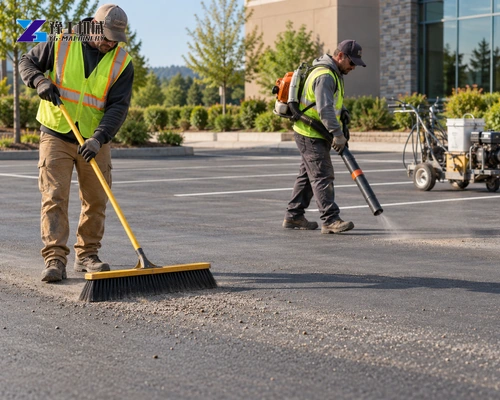
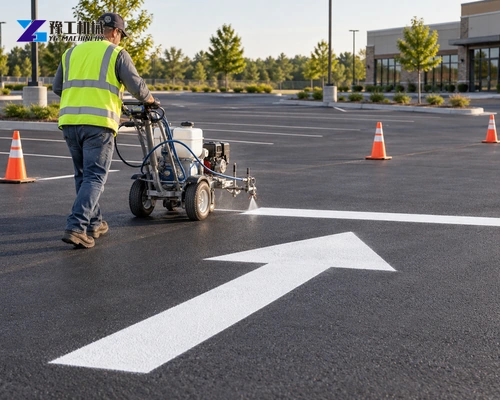
Send the marking method, lot area and delivery location so the quoted machine, accessories and freight can be compared as one package.
REQUEST A COMPARABLE ROAD-MARKING OFFERParking lot line striping machine FAQs
Not necessarily. A single-gun machine lays one controlled spray path at a time; arrows, text and other graphics may need templates, masking or a separate process. Match the machine to the marked plan.
The YG-8S lists a spray-width range of 100–300 mm. The project drawing determines the required width, and the final line should be checked on representative pavement before the full lot is marked.
No. It is listed as a cold-paint road marking machine with one spray gun. Thermoplastic marking uses a different material and heating process, so the equipment package should be selected accordingly.
Prepare a representative patch, set the guide and nozzle for the specified line, then inspect width, starts, stops and edge consistency at multiple points. Include a restart or turn in the test.
Paint compatibility and condition, nozzle setup, machine alignment, operator pace and pavement preparation all affect the stripe. A short test helps identify which factor needs adjustment.
Send the lot layout, requested line types and widths, pavement photos, paint system, access schedule, work-zone restrictions and delivery location.
Turn the lot plan into a machine and work-package comparison
The machine choice follows the layout: long straight runs, repeated starts, symbols and access limits create different operating demands. Share the marked plan and a representative surface photo so the YG-8S or another road-marking configuration can be compared against the work sequence. Use the form below for the full project details.