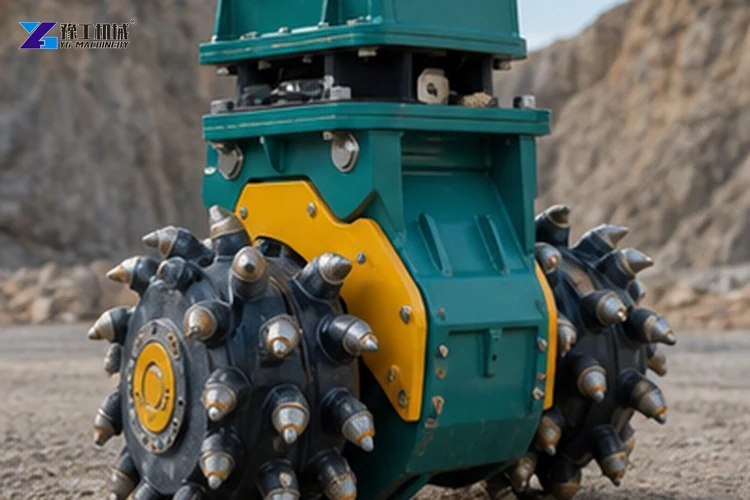
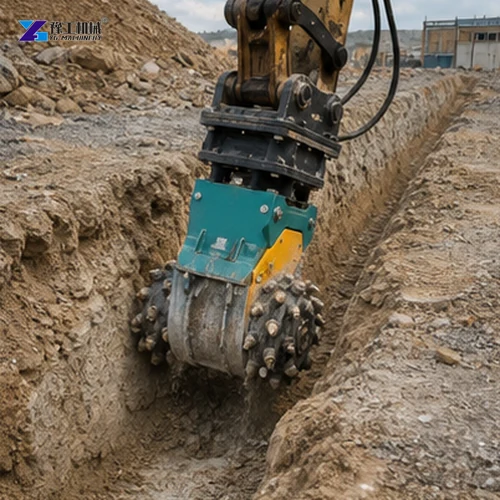
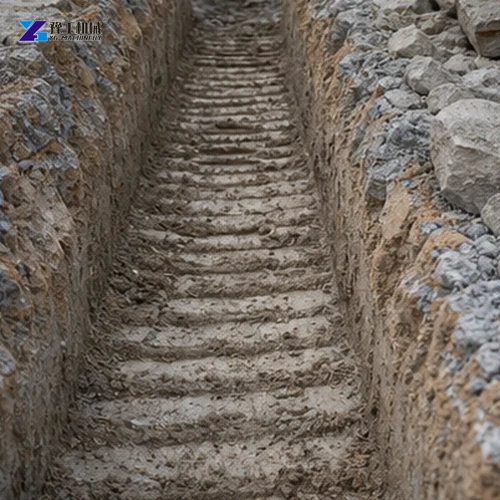
A contractor choosing between a drum cutter and an impact breaker is choosing the finished result as much as the production method. A drum cutter attachment removes material through continuous pick contact, which can create a defined trench, wall profile or excavation face. A breaker concentrates repeated impacts and may be more suitable when rapid fracture matters more than surface control. The correct decision depends on material, geometry, vibration limits, carrier hydraulics and the plan for removing cut spoil.
What Finished Result Does The Excavation Require?
Define the target before comparing tools. Record trench width and depth, wall or tunnel profile, permitted overbreak, final surface condition and any structure or service close to the work. Continuous cutting is valuable when the excavation must follow a controlled line or leave a surface that needs limited secondary trimming. If the only objective is to fracture a large open mass and precision is unimportant, an impact method may remain practical.
Material evidence is equally important. Provide the rock or concrete type, strength range, weathering, abrasiveness and reinforcement. Mixed ground can change tool loading within one pass, while hard inclusions can increase pick wear. Photographs help with context, but bore logs, test results or representative samples give the supplier a stronger basis for selecting drum geometry and picks.
How Do Noise And Vibration Limits Change Tool Selection?
A drum cutter applies many smaller cutting contacts rather than repeated high-energy blows. This operating pattern can support work near occupied buildings, sensitive structures or projects with controlled excavation limits. It does not make the job free of vibration or noise. The contractor should still define site limits, monitor the work where required and confirm that the carrier, material and cutting technique suit the restriction.
Breaker suitability depends on the same context. Impact breaking can be productive in fractured rock, massive concrete or open work where vibration and irregular edges are acceptable. In a restricted trench or refurbishment project, the cost of overbreak, complaints, repair and secondary trimming may make controlled cutting more valuable even when headline removal rate is lower. Compare the complete job outcome, not one hourly production claim.
| Decision Point | Drum Cutter Attachment | Hydraulic Breaker |
| Working Action | Continuous milling | Repeated impact |
| Finished Profile | Controlled and comparatively even | Rougher fractured surface |
| Overbreak Control | Useful for defined geometry | Depends strongly on fracture path |
| Noise And Vibration | Often lower operating pattern | Higher impact pattern |
| Spoil | Smaller cut fragments | Larger irregular fragments |
| Best Fit | Profiling, trenching, controlled excavation | Rapid fracture and open demolition |
If the project has a defined profile, sensitive surroundings or expensive correction work, send YG the drawings and material information for a method review.
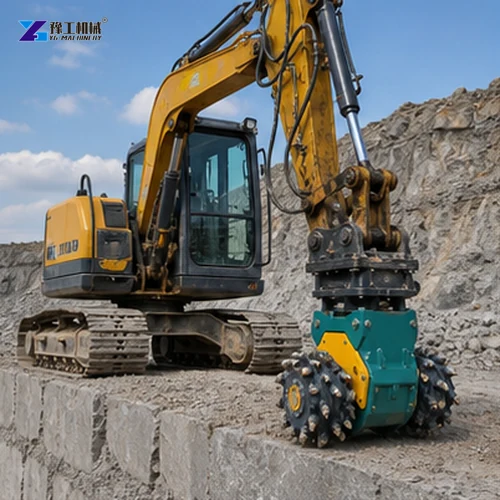
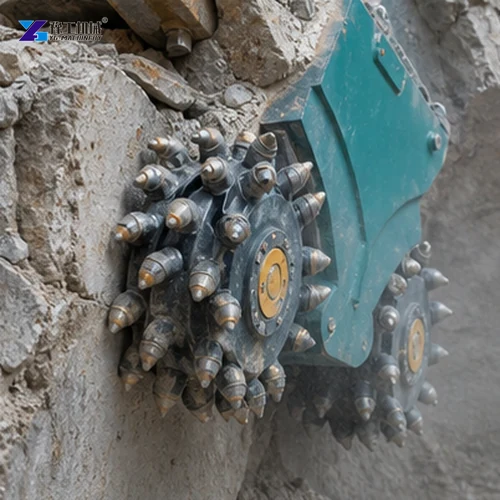
Can The Excavator Power The Selected Cutter Head?
Carrier weight only narrows the possible head range. Confirm auxiliary flow, operating pressure, return-line condition, hydraulic power, cooling capacity and mounting dimensions. The oil flow available at the attachment must remain stable under load. Excessive return restriction creates heat and reduces usable power; undersized hoses and couplings can make an otherwise suitable carrier perform poorly.
Published YG references extend from the YG140 for 5–10 ton excavators at 22 kW and 40 L/min to the YG240 for 20–24 ton carriers at 65 kW and 200–250 L/min. Intermediate models cover different torque and speed ranges. Larger is not automatically better. The head must let the excavator remain stable, maintain the intended cutting angle and move the cutter through the face without relying on excessive boom force.
| Model | Excavator | Max Power | Speed | Flow | Max Torque |
| YG140 | 5–10 t | 22 kW | 0–120 r/min | 40 L/min | 3200 N·m |
| YG160 | 10–15 t | 45 kW | 0–100 r/min | 100–110 L/min | 5400 N·m |
| YG180 | 15–21 t | 55 kW | 0–80 r/min | 130–180 L/min | 5600 N·m |
| YG240 | 20–24 t | 65 kW | 0–90 r/min | 200–250 L/min | 12800 N·m |
What Productivity Pattern Should The Contractor Expect?
Drum-cutter production is created by repeatable passes, not by forcing the entire head into the material. Establish a shallow reference cut, keep the drum aligned and increase depth only when the carrier and picks remain stable. Material strength, abrasiveness, fracture behavior, head width, pick condition and operator technique all affect output. A short site trial on representative material is more useful than applying an unrelated cubic-meter claim.
Plan carrier repositioning and spoil removal as part of the cycle. Loose fragments can cushion the picks and make the head regrind material. Decide whether the same excavator changes attachments to clear the trench or whether a support machine works alongside it. Access for trucks, conveyors, water control or dust suppression can set the real cycle time. In tunnels and enclosed sites, ventilation and visibility also influence the safe production window.
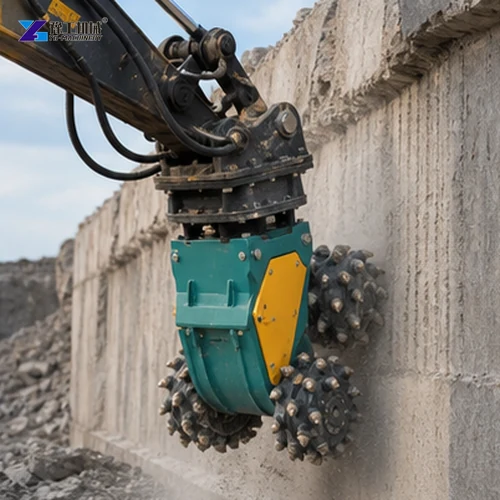
How Should Picks And Cut Material Be Managed?
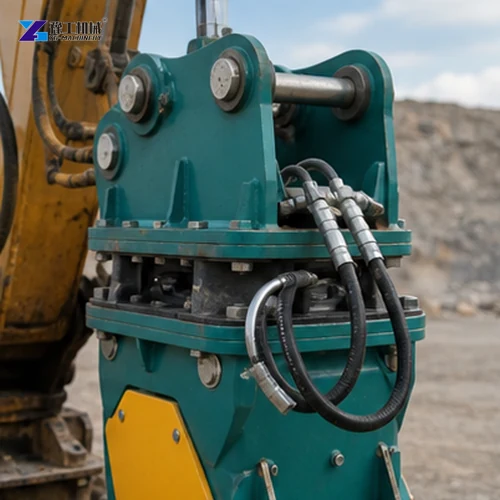
Inspect picks, retainers and holders before work and at intervals suited to the material. Picks designed to rotate must remain free; packed fines can create flat wear and damage the holder. Replace missing or badly worn tools before neighboring picks become overloaded. An uneven wear pattern may indicate poor head alignment, excessive side loading or an unsuitable cutting direction.
Track production and pick use together. Cost per pick does not show whether the cutter is economical if a cheaper tool loses penetration and adds machine hours. Record material zone, working time, removed volume and replaced tools. Keep service picks, retainers, removal tools and the required lubrication on site so a small wear item does not stop the carrier.
When Is A Breaker Still The Better Choice?
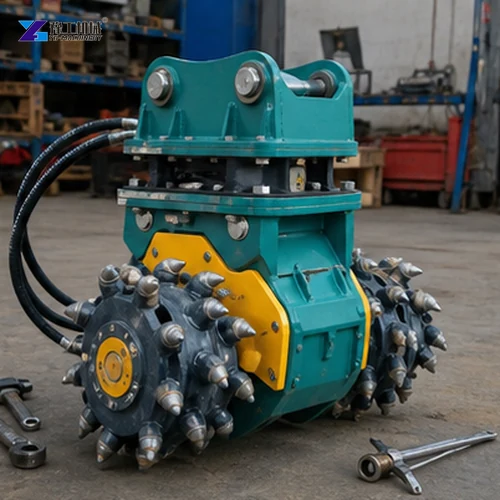
Choose the breaker when the work primarily requires rapid impact fracture, the resulting edge is acceptable and the material responds well to blows. It can also be the right first tool for isolated hard projections or large masses where a controlled milled face has little value. Choose the drum cutter when profile, trench width, lower disturbance, smaller fragments or reduced secondary trimming carry commercial value.
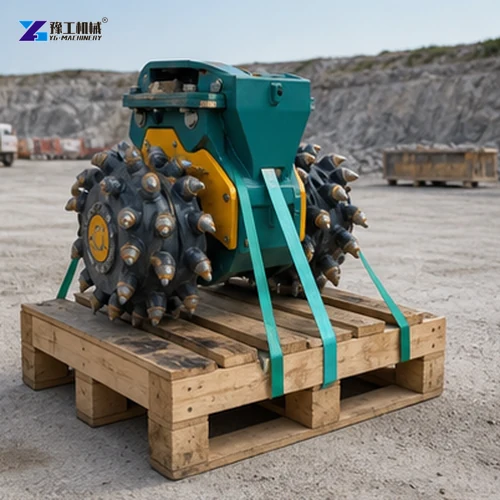
Some projects use both tools in sequence. The breaker opens or reduces a massive zone, while the cutter completes boundaries and final geometry. Review the YG drum cutter machine, concrete breaker attachment and excavator rock saw pages to compare controlled milling, impact breaking and blade cutting by the required result.
Drum Cutter Attachment FAQ
It may suit selected concrete work after reinforcement, strength, access, pick system and spoil plan are reviewed. Dense steel can require a different cutting method.
No. Production depends on material and the required result. A cutter can save trimming and overbreak even when direct removal rate is not higher.
A suitable configuration may support wet or underwater work after technical confirmation of depth, seals, hoses, carrier and material-removal method.
Abrasive material, unsuitable pick grade, excessive pressure, poor alignment, blocked pick rotation and regrinding loose spoil can accelerate wear.
Provide excavator model, flow and pressure, mounting dimensions, material evidence, required geometry, access limits, environment, destination and working hours.
Choose The Method From The Required Job Result
Send YG the excavation drawing, material information, carrier hydraulics and site restrictions. State how spoil will be removed and how the finished surface will be accepted. These details allow the technical team to compare cutter head, pick arrangement and mounting with the real job, and to explain when a breaker or rock saw would be the more practical alternative.