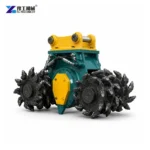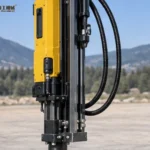
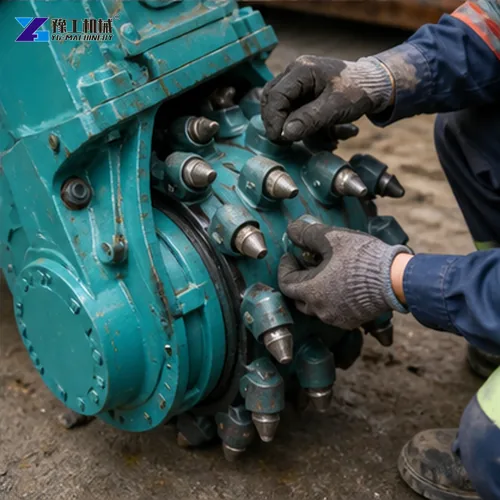
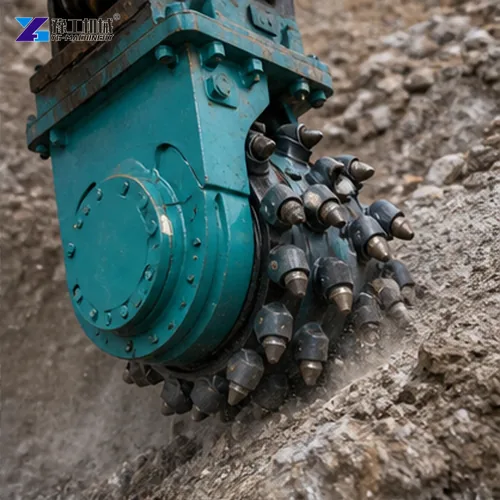
YG drum cutter machines mill rock or concrete with rotating drums and replaceable picks. They are suited to tunnel-wall profiling and trenching when the required cut shape matters more than breaking material into large pieces. Four models—YG140, YG160, YG180 and YG240—are listed below. Match the carrier’s operating-weight range, hydraulic circuit and mounting interface to the selected model, then check material, cut width and depth, reach and spoil removal. For YG180 and YG240, ask YG for the model-specific hydraulic-flow range in L/min; do not treat the listed r/min figures as flow values.
YG Drum Cutter Machine Parameters
Use the excavator-weight range as a first screen, not the only fit check. A drum cutter also needs a compatible hydraulic circuit and mounting interface, with enough carrier stability and reach for the planned cut. Compare the required profile and working width with access and spoil removal before selecting a model.
| Model | YG140 | YG160 | YG180 | YG240 |
| H | 650mm | 820mm | 830mm | 1395mm |
| W | 410mm | 650mm | 780mm | 960mm |
| D | 390mm | 460mm | 480mm | 620mm |
| Excavator weight | 5~10T | 10~15T | 15~21T | 20~24T |
| Max power | 22Kw | 45Kw | 55Kw | 65Kw |
| Speed | 0~120r/min | 0~100r/min | 0~80r/min | 0~90r/min |
| Flow | 40L/min | 100~110L/min | Ask YG for L/min | Ask YG for L/min |
| Max Torque | 3200N.m | 5400N.m | 5600N.m | 12800N.m |
The table’s YG180 and YG240 flow entries use r/min, a rotational-speed unit rather than a hydraulic-flow unit. Before choosing either model, request its flow range in L/min for the exact excavator and cutter configuration. Check the carrier’s available flow and pressure against the selected model; do not infer missing flow figures from another model.
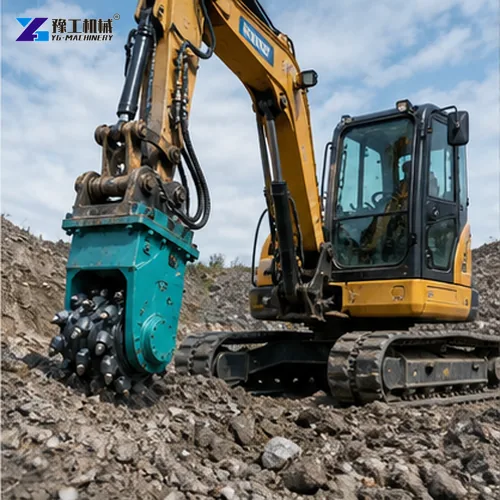
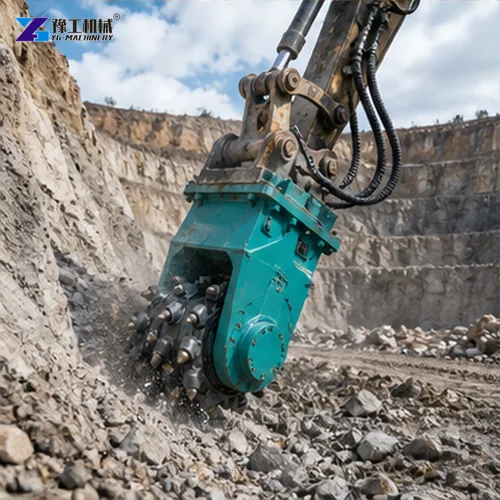
How Does a Drum Cutter Machine Work?
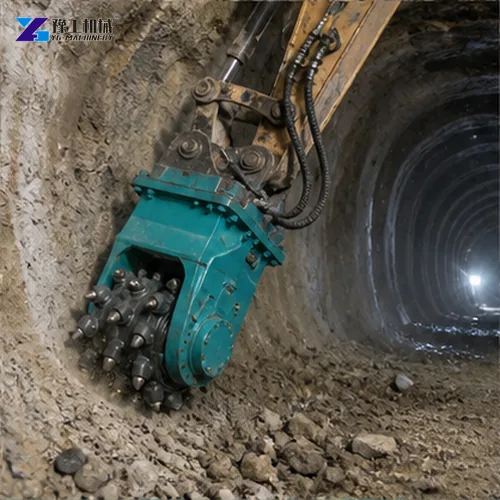
An excavator’s auxiliary hydraulic circuit powers the motor, which rotates the cutter drum and its picks against the material. As the operator advances the attachment in controlled passes, the picks mill rock or concrete to form a trench or shape a surface. A breaker fractures material through repeated impacts; a drum cutter removes it progressively, which can help when a defined profile matters. It is not automatically the faster choice for bulk demolition or very hard formations: results depend on material, cut depth and width, pick condition, carrier match and debris removal.
Drum Cutter Machine Components and Their Function
- Hydraulic motor: Receives oil from the excavator circuit and turns the cutter drum. Match the selected model’s hydraulic requirements to the carrier.
- Drum and pick holders: Position the cutting picks across the working width. Inspect the drum and holders for wear or damage according to the model’s maintenance guidance.
- Carbide picks: Contact the material and create the milling action. Rock abrasiveness, reinforcement and cut depth affect wear, so a generic operating-hour estimate is not reliable.
- Mounting bracket: Connects the cutter to the carrier. Check the excavator model, pin diameter, ear spacing, hydraulic connections and working angle for fit.
- Seals and bearings: Support the rotating assembly. Do not assume ordinary sealing makes a cutter suitable for submerged or abrasive-slurry work; that application needs model-specific suitability and maintenance guidance.
In operation, the carrier circuit powers the motor, the motor turns the pick-covered drum, and the operator controls material removal by advancing the attachment through the cut. If the carrier cannot supply the selected cutter’s required hydraulic conditions, or the mount restricts the working angle, progress and control can suffer. Check the auxiliary circuit, mounting dimensions and planned profile together before setup.
Drum Cutter Machine Applications
A drum cutter machine is most useful when the job calls for controlled milling or a shaped cut. Common applications include:
- Trenching in rock for utility or pipeline routes where the design calls for a defined cut section.
- Profiling tunnel walls or rock faces in controlled passes to reach a planned contour.
- Selective milling of concrete floors, walls or parapets where the work plan calls for localized material removal.
- Secondary sizing or shaping of stone where the material and required output suit milling rather than bulk breaking.
- Removing a local high point from rock or concrete when adjacent geometry needs to be preserved.
These applications are not a promise of a fixed production rate. Abrasive or very hard material, deep cuts, restricted reach and slow spoil removal can all reduce progress. Define the material, target width and depth, excavator model, working reach and hydraulic circuit first; then check whether the cutter fits the actual task.
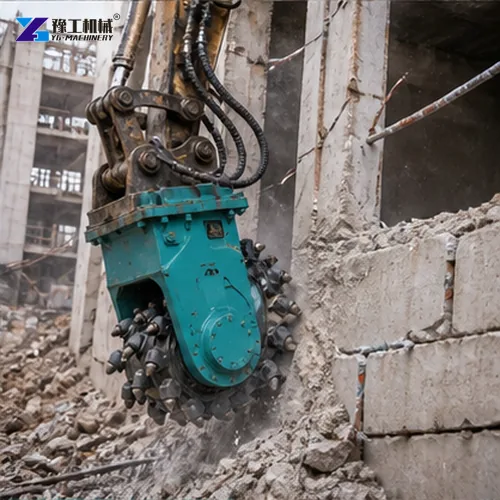
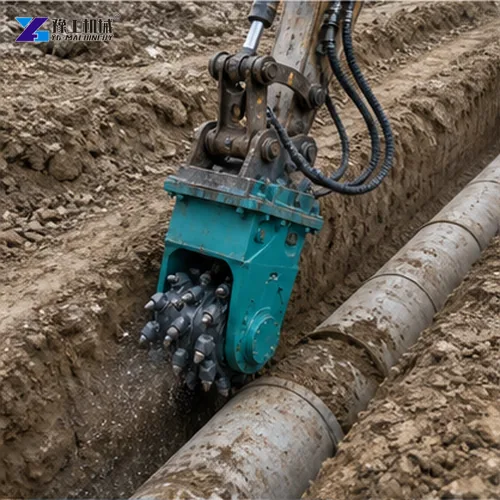
Drum Cutter Machine Benefits and Limits
A drum cutter machine can be useful when its milling action matches the work; the practical benefit depends on the job and carrier rather than a universal output claim:
- Progressive material removal: The rotating picks mill through successive passes, which can help shape a defined profile; the achieved finish depends on material and operating conditions.
- Work across a specified width: Drum width and the planned pass affect the cut section, so compare the model dimensions with the trench or tunnel profile before purchase.
- Excavator-mounted operation: The excavator acts as the carrier, but hydraulic capacity, mounting dimensions, reach and stability still determine whether the combination fits.
- Replaceable wear components: Picks can be serviced as wear develops; the replacement interval depends on material abrasiveness, reinforcement and operating practice.
- Several listed carrier ranges: The YG140, YG160, YG180 and YG240 cover different excavator-weight ranges in the table; weight alone does not establish hydraulic or job suitability.
Drum Cutter Machine FAQ
Start with the excavator-weight range shown for each model, then check hydraulic flow and pressure, return-line conditions, mounting dimensions and working reach. For YG180 and YG240, request the flow range in L/min for the exact carrier and cutter configuration before selecting.
Some reinforced-concrete tasks may be suitable, but the result depends on concrete strength, rebar size and spacing, pick configuration and carrier match. Do not assume the cutter will cut through reinforcing steel; share the section details and intended removal depth for a configuration review.
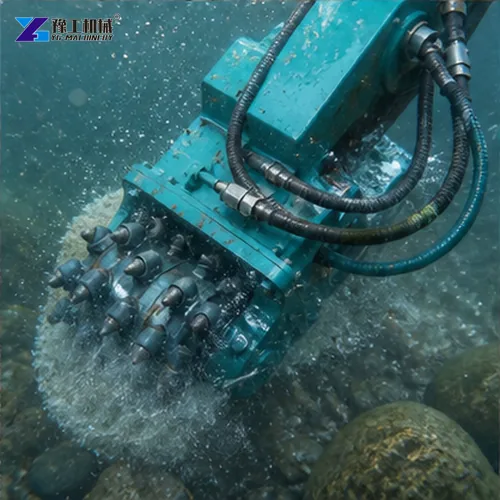
Do not assume a standard drum cutter is suitable for submerged operation. Water depth, sealing, motor configuration, hydraulic connections and maintenance requirements must be checked for the exact model before it is used underwater.
There is no reliable generic service-hour figure. Pick wear varies with rock abrasiveness, reinforcement, cutting depth and operating practice. Inspect the picks regularly and replace them in line with the model’s maintenance instructions.
The delivery schedule depends on the selected model, mounting bracket, order scope, destination and current production and shipping arrangements. Request a schedule for the chosen configuration before setting a project start date.
What Should You Include in a Drum Cutter Machine Quote Request?
For a drum cutter machine quotation, send the excavator make and model, operating weight, available hydraulic flow and pressure, required trench or tunnel profile, material and site access. These details help match the cutter, mounting bracket and working envelope to the job.
- Excavator make, model and operating weight.
- Available auxiliary hydraulic flow, pressure, return-line arrangement and connection details.
- Required trench, tunnel or surface profile, including target width and depth.
- Material type, hardness, abrasiveness and any reinforcement.
- Working reach, access restrictions and how milled material will be removed.
- Destination and any requested spare parts or commissioning support.
If you have a drawing or site photo, include it with the dimensions and destination. YG can then review the requested cut and carrier interface before preparing a model-specific offer.