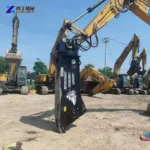
Steel beams, reinforced concrete and mixed demolition rubble can arrive in the same work area, but they do not require the same contact from an excavator attachment. A long cutting jaw can reduce steel to manageable pieces. A toothed crushing jaw can break concrete away from reinforcement. Selecting a hydraulic shear vs concrete pulverizer means identifying which of those results the job needs first.
The distinction matters even when both attachments have a hydraulic cylinder and an opening jaw. Their jaw shapes, contact areas and cutting features are organised for different material behaviour. For a demolition contractor or recycling operator, the useful comparison follows the material into the work area and then asks what the next handling or processing operation needs to receive.
Hydraulic Shear Cutting vs Concrete Pulverizer Crushing
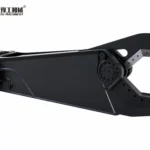
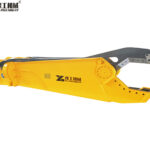
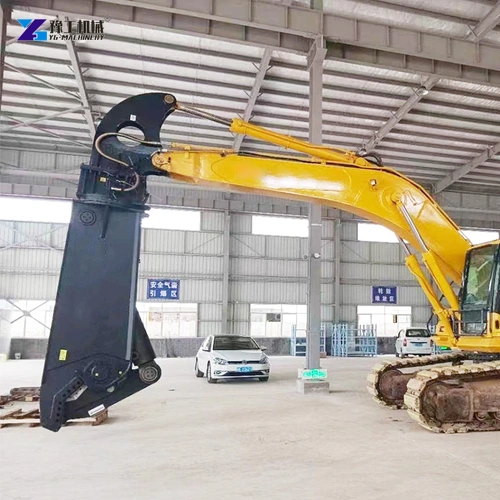
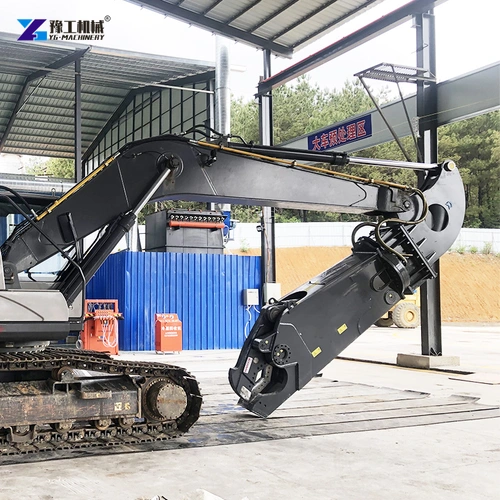
A dedicated metal shear brings a moving cutting edge past an opposing edge. The edges load the metal over a narrow cutting zone as the jaw closes, deforming and then separating the section. The jaw holds and guides the section towards that zone; blade condition and clearance affect how cleanly the edges pass. The objective is to separate a beam, plate, pipe or other suitable steel item into pieces that can be handled or processed further.
The material’s shape changes that task. A hollow tube, a solid bar and a flanged beam can present different contact and support conditions even when their outside dimensions look similar. A large opening permits an object to enter the jaw; it does not state the thickness of steel that the attachment can cut. The cutting-capacity information for the actual material and blade position is therefore more useful than opening size alone.
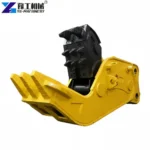
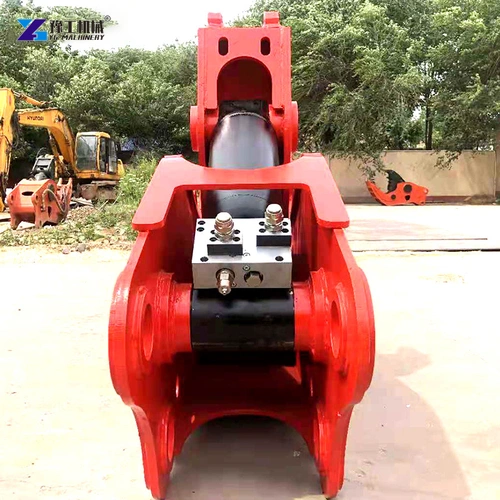
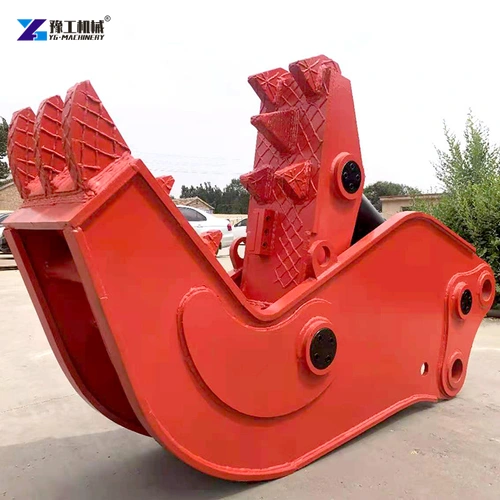
A concrete pulverizer closes broad, toothed jaws around a concrete section. The small tooth-contact areas concentrate the load and start local fractures; continued closure breaks the surrounding concrete into smaller pieces. Embedded reinforcement can hold these pieces together after the concrete has cracked, so further reduction and separate steel handling may be needed to release it. A pulverizer with short steel-cutting blades may also cut suitable reinforcement in its specified blade area. Concrete crushing takes place at the teeth, while reinforcement cutting takes place at those blades: they are different working zones on the attachment.
This difference provides a practical starting point: use cutting geometry for a steel-cutting task, and crushing geometry for concrete reduction and reinforcement exposure. The YG hydraulic shear product family and excavator pulverizer range support those two different equipment choices.
Identify whether the main output is cut steel or concrete separated from reinforcement.
Match the Attachment to Steel, Concrete and Reinforcement
Three material groups help explain the hydraulic shear vs concrete pulverizer choice. Each group needs a different processing result before the material moves to the next stage:
- Structural steel and oversize scrap. The main requirement is to cut suitable metal sections to a size that can be moved, loaded or accepted by the next process. The shear must engage the actual section within its cutting capability. Positioning, material support and the approved dismantling method remain part of the job; an attachment is not a structural demolition plan.
- Reinforced-concrete pieces. The main requirement is often to reduce the concrete and expose embedded reinforcement. A suitable pulverizer can work through the concrete while allowing steel and mineral material to follow different handling routes. It is important to distinguish reducing already-demolished pieces on the ground from removing members that remain part of a structure.
- Mixed steel and concrete rubble. The first operation depends on how the materials are connected. Concrete surrounding reinforcement needs to be broken away before that steel can be assessed and handled effectively. Separate steel members may instead go directly to a shear. An organised receiving area keeps these routes from repeatedly crossing one another.
The output requirement should name the next step. Concrete destined for further crushing is not automatically a finished aggregate: the downstream process may need additional crushing and screening to obtain the required particle sizes. Exposed rebar still needs separation from attached concrete and collection into the steel stream. Cut steel may need further sizing and removal of attached material to meet the receiving processor’s requirements. These tasks explain why pulverizing, shearing and sorting can be separate stages rather than interchangeable attachment functions.
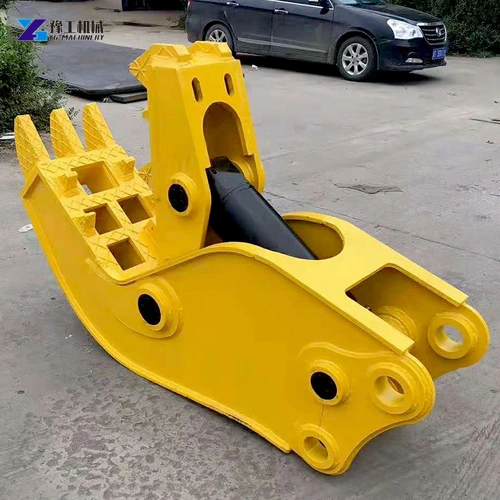
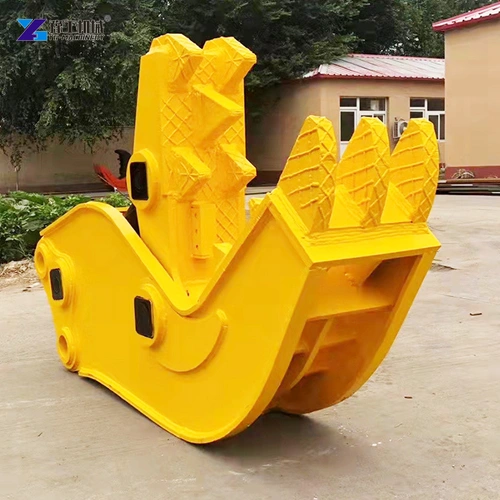
YG Hydraulic Shear and Concrete Pulverizer Parameters
The named configurations below describe two metal shears and two concrete pulverizers. They are separate product families, not interchangeable jaw options on one common attachment. Photo examples elsewhere in this article show different configurations within those equipment families.
| Parameter | YG-620 metal shear | YG-1413 metal shear | YG400 pulverizer | YG600 pulverizer |
| Attachment weight | 620 kg | 1,413 kg | 670 kg | 1,350 kg |
| Listed excavator class | 5–9 t | 10–19 t | 6–9 t | 10–15 t |
| Maximum jaw opening | 334.4 mm | 540 mm | 587 mm | 718 mm |
| Working pressure | 235 bar | 300 bar | 280 bar | 320 bar |
Opening and weight must be read alongside the working function. The wider opening of a pulverizer allows a concrete section to enter its crushing geometry. It is not evidence that the pulverizer can cut a steel section that a smaller-opening shear cannot. Equally, a shear’s long cutting jaw is not a reason to use it as a general concrete crusher.
The recommended excavator weight ranges narrow the initial carrier comparison. Actual compatibility also depends on mounting, the mass permitted in the intended working position, hydraulic supply and the installed arrangement. Two attachments in similar weight classes can require different working pressures and different operating circuits.
Working pressure describes the hydraulic operating requirement, not a steel thickness or concrete strength rating. Flow requirements and any additional functions must also match the supplied attachment. Where a rotating configuration is selected, its rotation circuit and controls are another part of that installation rather than a feature established by the jaw dimensions.
For a hydraulic shear vs concrete pulverizer quotation, keep the attachment model, carrier and material together. Comparing only purchase price or maximum opening can select the wrong working tool before hydraulic compatibility is even considered.
Compare the exact attachment mass, opening and hydraulic requirements with the carrier.
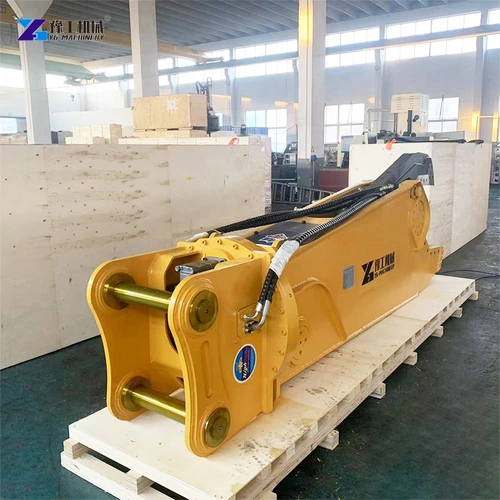
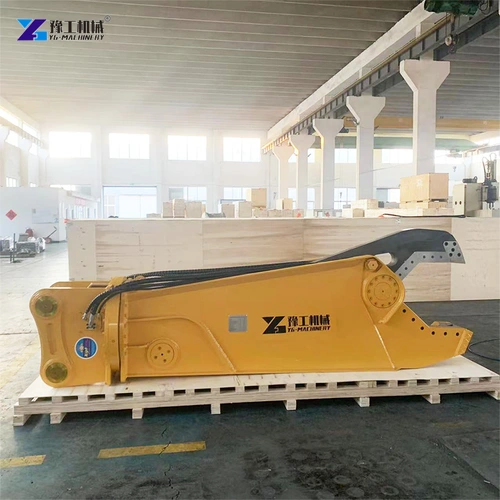
Combining Shearing, Pulverizing and Material Separation
On a mixed recycling task, the two attachments can occupy different stages of the same route. Concrete pieces are reduced with the appropriate pulverizer, exposed reinforcement is handled separately, and suitable oversize steel can then be cut to the required downstream size. The exact order follows the material condition and the approved work method; it is not a fixed recipe for every demolition site.
That route needs enough space for receiving, processing and separated outputs. If newly delivered rubble is dropped into the steel collection area, the crew creates another sorting operation. If long exposed reinforcement remains across a travel route, material handling becomes harder even after the concrete has been reduced. The benefit comes from connecting attachment work to the next operation, not merely keeping the excavator jaw moving.
Consider a yard processing broken reinforced-concrete panels alongside loose structural steel. The concrete stream needs reduction and reinforcement separation; the loose steel stream needs section assessment and cutting. A dedicated tool for each recurring stream may be useful, but the work volume and changeover arrangement determine how those tools are deployed.
One excavator using two compatible attachments will perform the tasks in sequence. Separate carriers can work concurrently only where the layout, operators and work controls support that arrangement. A selective concrete demolition guide develops the concrete-processing task; the equipment comparison here determines which attachment should perform each material operation.
Carrier Matching and the Limits of a Force Comparison
Force figures are only meaningful when their definition and measuring position are understood. A metal shear may have different values near the jaw base, in the middle and at the tip. The effective lever arm changes along the jaw, so those positions do not represent the same cutting condition. A pulverizer’s force designation may describe another jaw arrangement altogether.
Placing the largest force from each catalogue into a ranking therefore loses the information needed for selection. It may compare different units, jaw positions and functions. Converting units can align the measurement units, but it cannot make the underlying working conditions identical. The better comparison asks what material section each tool can engage and process in its specified operating arrangement.
Start with the material and the required result, select the appropriate jaw function, then match the named attachment to the excavator. The carrier review should cover the mounting interface, hydraulic supply, attachment mass and the intended working position. Fit the handling and separation route around that complete arrangement.
Choose the shear when the recurring task is steel cutting. Choose the pulverizer when the recurring task is concrete reduction and reinforcement exposure. Where both streams recur, compare a coordinated combination. Useful processing speed depends on the steel section or concrete piece being engaged, jaw positioning, attachment changes and the time needed to move separated material onward. Matching those stages to the correct tool matters more than treating one production figure as applicable to every demolition job.
Describe the mixed materials and the next recycling operation.
Hydraulic Shear vs Concrete Pulverizer FAQs
Some configurations include short cutting blades for suitable reinforcement. Their position and rated capability govern that function; it does not make the full crushing jaw a substitute for a dedicated heavy steel shear.
No. Opening describes entry geometry. Cutting capability depends on the section, material, blade position and the specific shear’s capacity information.
Not without comparing the definition, jaw location and operating conditions. Base, middle and tip values on a shear are different, and a pulverizer’s force may describe a different working arrangement.
No. A fixed attachment is repositioned through the excavator’s boom, arm and machine movements. A rotating configuration adds a mechanism that turns the jaw assembly relative to its mounting, helping orient the jaw to the material. That function requires the corresponding hydraulic circuit and controls and must be specified for the selected model.
When recurring work includes both substantial steel cutting and concrete reduction, the tools can serve different material streams. Work volume, carrier availability, changeovers and separated-output handling determine the useful arrangement.
Send the material description, desired output and excavator details to discuss the shear or pulverizer arrangement.