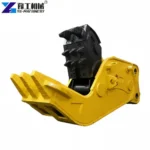
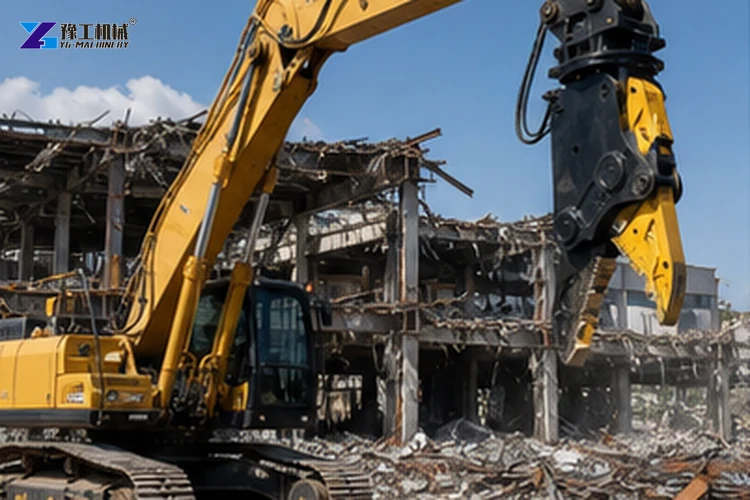
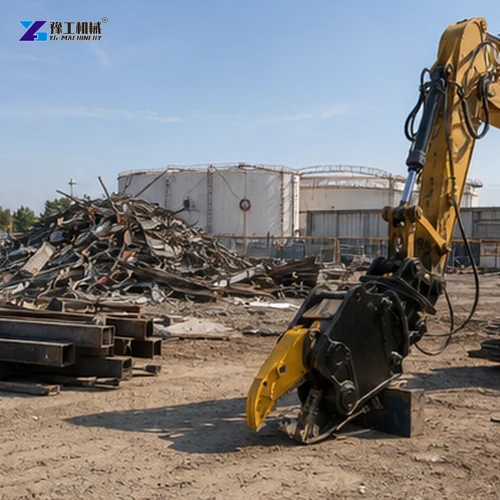
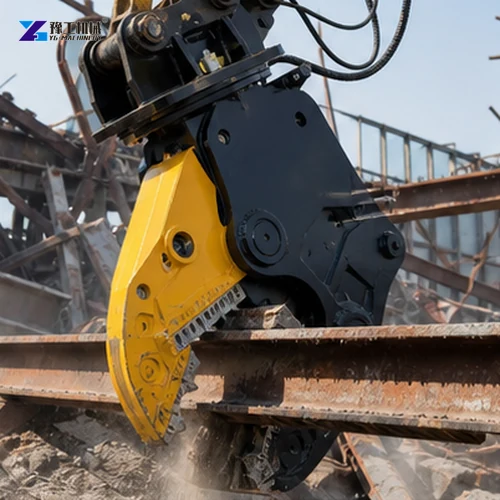
A Spanish customer ordered an eagle beak hydraulic shear for metal-processing work in June 2024. The purchase record confirms the product, destination and completed commercial order. For this type of project, selecting a shear by excavator tonnage alone is not enough: the jaw must accept the actual steel section, the carrier must supply the required pressure and flow, and the mounting position must remain stable at the planned working reach.
YG organized the proposal around the material being cut and the excavator that would carry the attachment. This case explains the checks behind that solution without disclosing the customer’s identity or private commercial documents. It is useful for Spanish contractors comparing a rotating eagle beak shear for structural steel, scrap processing or controlled dismantling.
What Cutting Problem Did The Spanish Buyer Need To Solve?
The attachment had to turn an excavator into a controlled metal-cutting carrier. Steel beams, plate, pipe and mixed scrap do not load a shear in the same way, so the first task was to define the maximum section rather than describe the work simply as demolition. Section thickness, shape, access angle and whether the material was fixed or loose all affected the required opening and cutting depth.
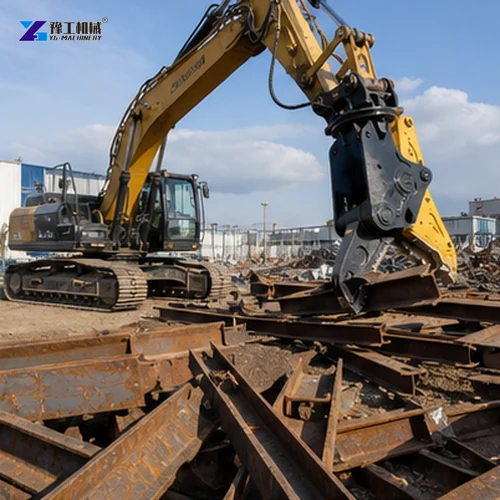
The working position also mattered. A shear mounted on the arm can work with a different allowable attachment weight from the same tool mounted on a boom or long-reach configuration. YG therefore treated carrier weight, mounting point, operating radius and site access as one selection problem. This prevents a technically powerful shear from becoming impractical because the excavator cannot position it safely.
How Did YG Match The Eagle Beak Shear To The Carrier?
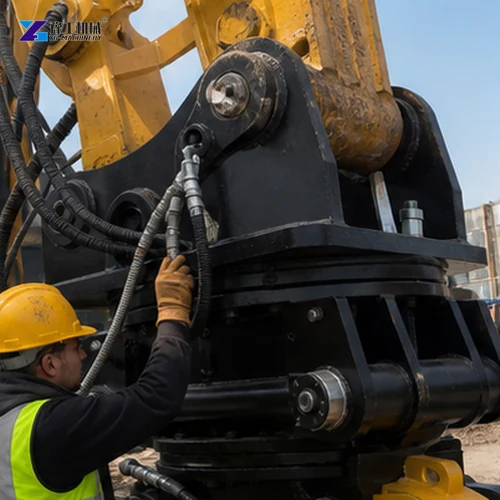
YG checked the carrier’s hydraulic pressure, available flow, auxiliary circuit and return arrangement against the shear model range. Working flow controls cycle performance, while insufficient pressure reduces usable cutting force. Excessive or incorrectly controlled flow can create heat and shorten seal life. The technical proposal therefore needed the excavator model and hydraulic data, not only a requested jaw size.
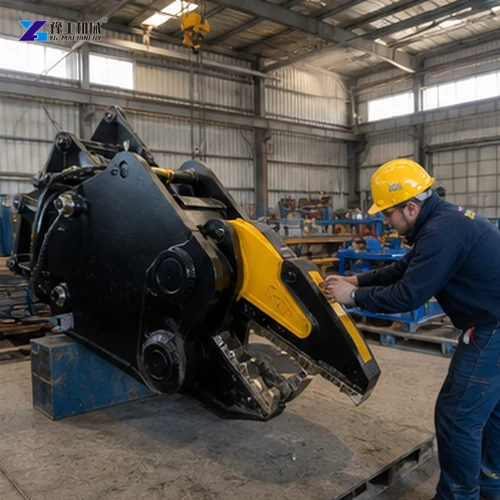
Mounting dimensions were reviewed separately. Pin diameter, pin-center distance, inside ear spacing and coupler type determine whether the bracket fits. Hose routing must allow full rotation and jaw movement without rubbing the boom, linkage or steel being processed. A rotating attachment also needs the correct rotation circuit and protection from twisting hoses during repeated positioning.
| Reference Model | Arm Installation | Boom Installation | Pressure | Working Flow | Opening |
| YG180RT | 13–17 t | 10–12 t | 250–300 bar | 90–110 L/min | 375 mm |
| YG280RT | 18–27 t | 14–18 t | 250–300 bar | 180–220 L/min | 485 mm |
| YG380RT | 28–39 t | 20–28 t | 320–350 bar | 200–250 L/min | 620 mm |
| YG580RT | 51–65 t | 40–50 t | 320–350 bar | 275–375 L/min | 780 mm |
These figures are screening references, not a substitute for reviewing the actual section and carrier. Buyers can send YG the excavator data and representative steel dimensions to narrow the suitable range.
Which Details Defined The Spanish Project Configuration?
The useful project description combined four details: the largest steel section, the normal section handled most often, the working position and the expected duty cycle. Sizing only for the single largest piece can make the attachment unnecessarily heavy for routine work. Ignoring that piece can create an unsafe expectation. The practical solution is to identify which material the shear must cut directly and which oversized pieces require preparation or another method.
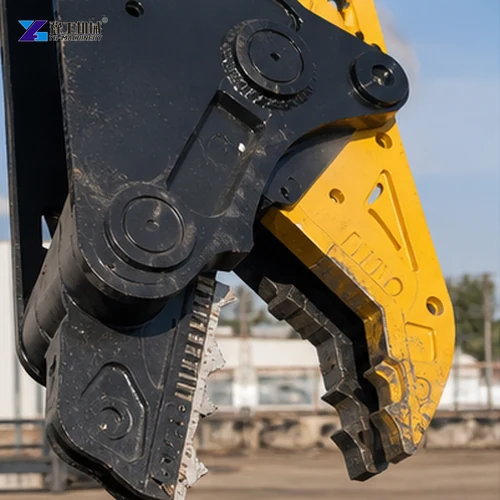
Blade serviceability was included in the purchasing discussion. Cutting edges are wear parts, and their life depends on steel grade, contamination, cutting position and operator technique. The buyer should know whether blades can be rotated or replaced, which clearances must be maintained and which spare parts should accompany the shipment. These details affect downtime more than a general statement about durability.
Need help matching the configuration to your project? Send the working conditions and YG can review the practical equipment scope for Eagle Beak Shear For Sale In Spain.
How Should An Eagle Beak Shear Be Used After Delivery?
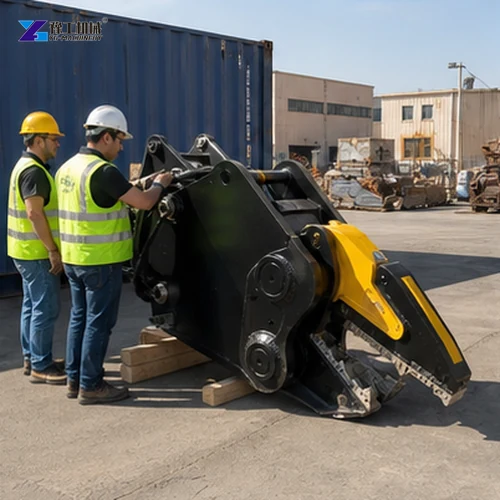
Before production, the installer should confirm bracket fit, pin retention, hose connections, rotation direction, relief settings and leak-free movement. The first cycles should be made without load, followed by a controlled cut in representative material. The operator should place steel within the intended blade zone instead of cutting at the jaw tip, and should reposition material rather than applying continuous side load.
Daily inspection should cover blade condition, jaw clearance, pivot lubrication, hose abrasion, retaining hardware and structural welds. When cutting coated tanks or enclosed sections, the contractor must also control residual contents and site hazards before the shear touches the material. The attachment improves mechanical cutting control, but it does not replace the project’s safety and environmental procedures.
What Did The Order Demonstrate For Other Spanish Buyers?
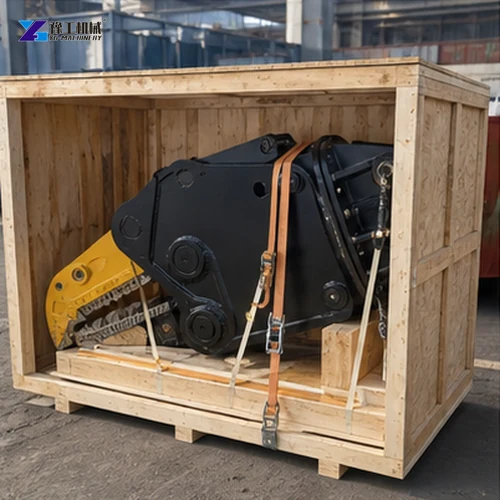
The completed 2024 order demonstrates that YG supplied this excavator shear type to Spain. More importantly, it shows the information needed to move from a product inquiry to a workable configuration: steel geometry, excavator details, installation position, hydraulic supply and service expectations. Another Spanish project may need a different model even when the customer uses the same product name.
Buyers comparing related processing tools can review the YG excavator shear attachment, excavator pulverizer and concrete breaker attachment pages. The shear is for steel cutting; the pulverizer and breaker solve different concrete-processing stages.
Eagle Beak Shear For Sale In Spain FAQ
No. Tonnage narrows the range, but mounting position, hydraulic flow and pressure, steel section, working radius and bracket dimensions must also be checked.
Provide the largest and normal steel sections, thickness, shape, material type, whether pieces are fixed or loose, and the expected daily cutting cycle.
A rotating model requires a compatible rotation circuit and correctly routed hoses. Confirm the carrier’s available circuits before ordering.
Inspect blades, jaw clearance, pivot points, lubrication, pins, hoses, retainers and structural welds according to the operating guidance.
Send excavator model, operating weight, pin dimensions, pressure, flow, coupler, steel details, mounting position, destination and preferred delivery schedule.
Need help matching the configuration to your project? Send the working conditions and YG can review the practical equipment scope for Eagle Beak Shear For Sale In Spain.
Prepare A Shear Request Around The Actual Steel
A useful quotation request states what must be cut and how the excavator will position the tool. Send photographs or drawings of representative sections, carrier information, linkage measurements and the project location. YG can then compare the opening, cutting depth, hydraulic demand and attachment weight, identify a suitable configuration and include the bracket, hoses and recommended spares in a clear proposal.